

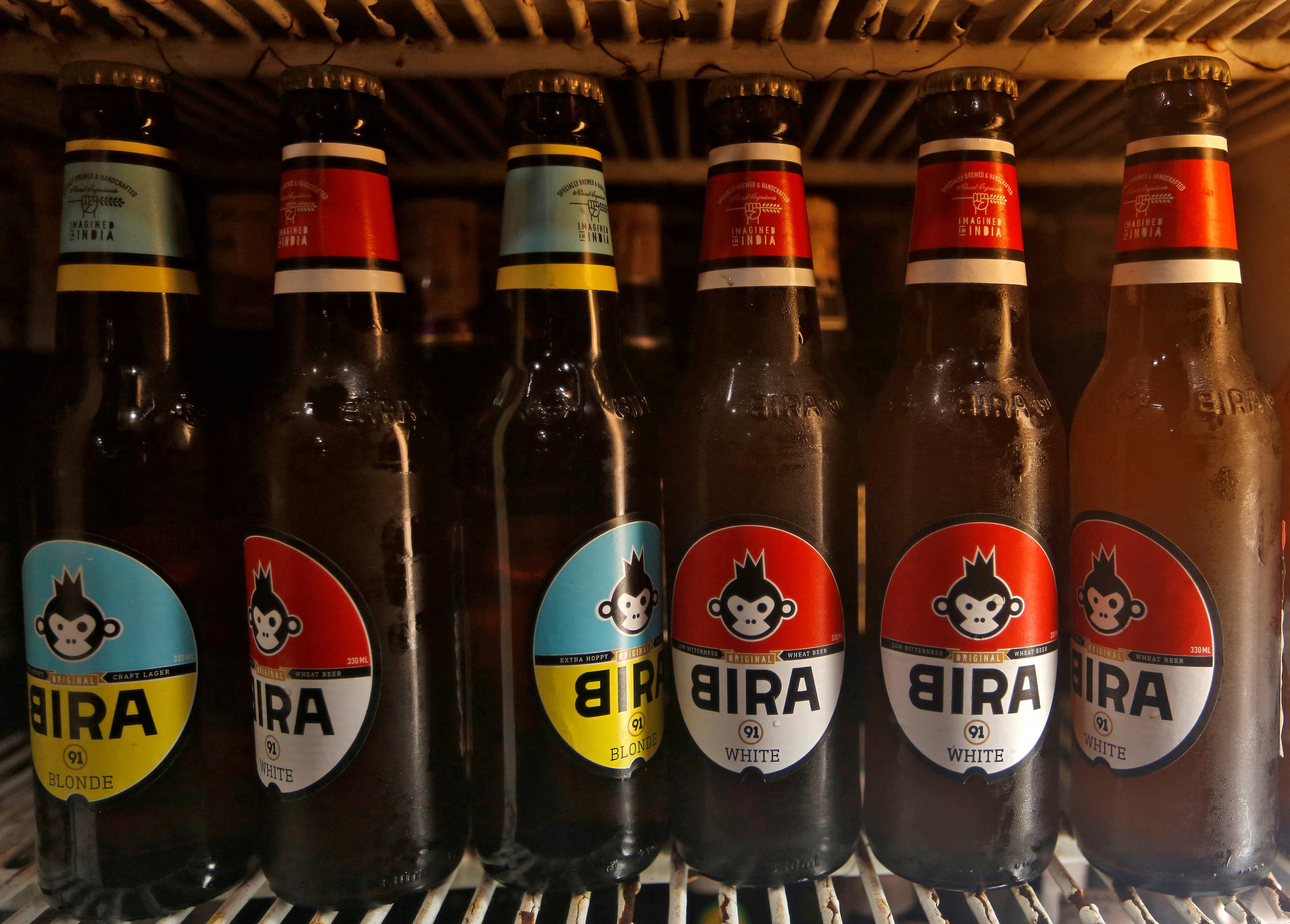
Bira 91’s Bitter Hangover: How a Name Change and Mismanagement Shook India’s Coolest Beer Brand
Once the toast of India’s millennial party scene, Bira 91—the quirky, home-grown craft beer that revolutionised the country’s drinking culture—now finds itself caught in a frothy mess. What began as a simple regulatory name change has spiralled into a full-blown crisis marked by an ₹80-crore loss, supply chain paralysis, and rising employee unrest calling for the ouster of founder Ankur Jain.
The Fall of a Homegrown Success Story
Founded in 2015, Bira 91 stormed into the market with its colourful branding, cheeky monkey logo, and bold flavours. It quickly became a symbol of urban cool—from roadside alcohol vends to upscale pubs. With massive visibility through IPL sponsorships, international investors like Sequoia Capital and Kirin Holdings, and a valuation once touching ₹4,370 crore, Bira 91 seemed unstoppable.
But in early 2024, a bureaucratic ripple triggered what would soon become a tsunami.
A Legal Name Change with a Domino Effect
The company’s official change from “B9 Beverages Private Limited” to “B9 Beverages Limited”—a move required under Indian corporate law as part of its IPO preparations—set off unforeseen chaos.
The name change meant every state had to reapprove licences, permits, and labels afresh since alcohol is regulated individually by each state. The process took months. In the meantime, Bira’s supply chain collapsed, warehouses overflowed, and ₹80 crore worth of stock sat unsold.
“Each state treats a renamed company as a new entity. Every label and licence must be redone from scratch, which can take up to six months,” said Bishan Kumar, Editor-in-Chief of Spiritz magazine. “It’s surprising that a brand of Bira’s scale didn’t plan this transition better.”
The delay crippled major markets like Delhi-NCR and Andhra Pradesh, where shelves went dry. Distributors grew frustrated, and vendors began dropping the brand altogether.
Crisis Deepens: Finances and Frustration
Bira 91’s financial health soon reflected its operational crisis.
According to employee petitions and financial disclosures, income fell from ₹846.6 crore in FY 2022–23 to ₹600 crore in FY 2023–24, while losses before tax widened from ₹391 crore to over ₹643 crore.
Salaries were delayed for months, reimbursements lapsed, and even provident fund contributions reportedly stopped more than a year ago. Over 250 employees petitioned the board, citing corporate governance failures, lack of transparency, and financial mismanagement, demanding a leadership overhaul.
Leadership Under Fire
At the centre of the storm is founder Ankur Jain, once celebrated as the face of India’s craft beer revolution. Critics within the company allege he ran Bira 91 “like a family proprietorship,” with his wife and mother also serving as board directors.
“The leadership made hasty decisions, lacked strategic planning, and failed to consult experts,” said an alcobev industry veteran. “What was once a story of ambition and success turned into one of mismanagement and complacency.”
Amid mounting criticism, Jain took to LinkedIn, defending the company and calling reports “inaccurate and driven by cynical objectives.” He promised to complete an ongoing fundraising round to stabilise the business and prioritise employee interests.
The Brewing Lessons Behind the Bubbles
Legal experts say the fiasco could have been avoided.
“Bira’s troubles underscore how crucial regulatory planning is during corporate transitions,” said lawyer Tejaswi Dudeja. “Simultaneous filings, coordinated approvals, and pre-cleared labels could have minimised the disruption.”
Beyond the paperwork, however, the crisis reflects larger governance lapses. From delayed dues to unclear strategy, insiders describe a company that grew fast but stumbled on its own expansion.
From Boom to Burnout
Bira 91’s journey—from a Delhi startup to a global craft beer name—was remarkable. By 2023, it was selling in 18 countries, running taprooms, and partnering with five IPL teams. For a generation of Indian drinkers, Bira wasn’t just beer—it was identity.
But success brewed faster than structure. The once-beloved brand is now fighting for survival, not sales.
As fundraising talks with Global Emerging Markets (GEM) continue, Bira 91’s future depends on whether it can regain the trust of investors, employees, and customers alike.
For now, the frothy beer head has given way to bitter reality. What started as a name change has become a cautionary tale—a reminder that even the coolest brands can go flat without clear vision and sound governance.


