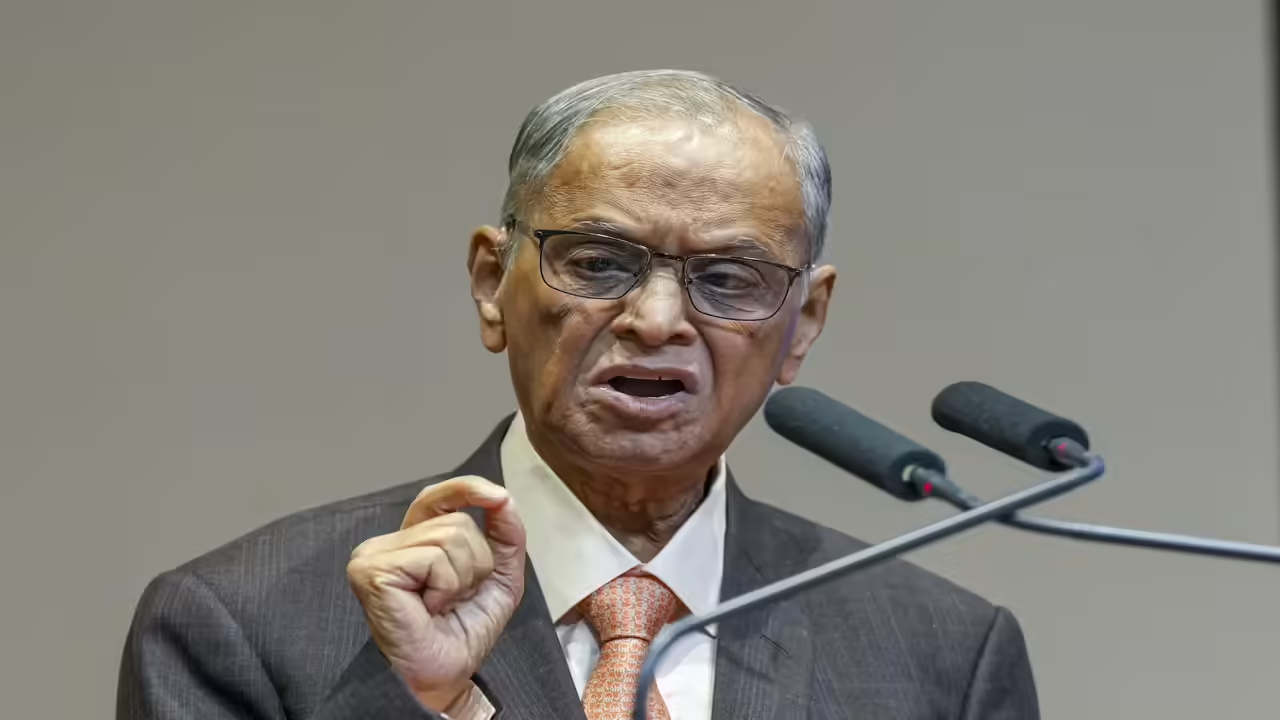
Narayana Murthy Invokes China’s 9-9-6 Culture Again, Reignites Debate on Longer Work Weeks for Indian Youth
Infosys co-founder Narayana Murthy has once again stirred conversation around India’s work culture, productivity, and economic ambition. In a fresh interview, the 79-year-old billionaire referenced China’s famed—and controversial—9-9-6 work model to reinforce his long-standing argument that young Indians must be ready to work longer hours if the country wants to accelerate its growth.
Murthy’s comments come nearly a year after his 2023 remark urging Indians to work 70 hours a week, which triggered widespread debate on work-life balance, labour policies, and the expectations placed on India’s workforce. This time, he broadened the discussion by pointing to China, a nation he said India could learn from, especially in terms of discipline and productivity.
What Exactly Is the 9-9-6 Work Model?
China’s 9-9-6 work culture—working 9 a.m. to 9 p.m., six days a week—became synonymous with the country’s tech boom. Companies like Alibaba, Huawei, and several startups embraced this grueling 72-hour work week in the late 2010s, claiming it was necessary to fuel innovation and rapid growth.
However, the model faced intense backlash for promoting burnout, health issues, and collapsing personal lives. In 2021, China’s Supreme Court declared the 9-9-6 practice illegal, but on-ground enforcement has been inconsistent, with the culture still persisting in many firms under different names.
Murthy’s Message to India’s Young Workforce
Speaking to Republic TV, Murthy emphasized that India’s youth must set higher expectations for themselves if they want to see the country match China’s pace.
“There is a saying in China—9, 9, 6. You know what it means? 9 am to 9 pm, 6 days a week,” he said. Murthy argued that such commitment is necessary for national growth, even if the idea may sound unpopular among younger professionals.
Reiterating his earlier position on work-life balance, Murthy said young people should focus first on building their careers and stability before worrying about personal time, advising them to “get a life and then think about work-life balance.”
Why He Believes India Needs Longer Working Hours
Murthy acknowledged India’s steady growth of 6.5%, calling it respectable but insufficient for catching up with China’s much larger economy—currently six times India’s size. He said transforming India into a global economic powerhouse will require “extraordinary action” from every segment of society.
“If we have great ideas and back them up with extraordinary action from every citizen—bureaucrats, politicians, corporate leaders, civil society—I believe we can match China. But the job is not easy,” he said.
He further added that progress can only come when individuals set “high benchmarks for their own actions,” emphasizing that the collective effort of millions is what will ultimately shape India’s trajectory.