Ladakh Protest Turns Violent: Dozens Arrested, Calls for Sensitive Handling
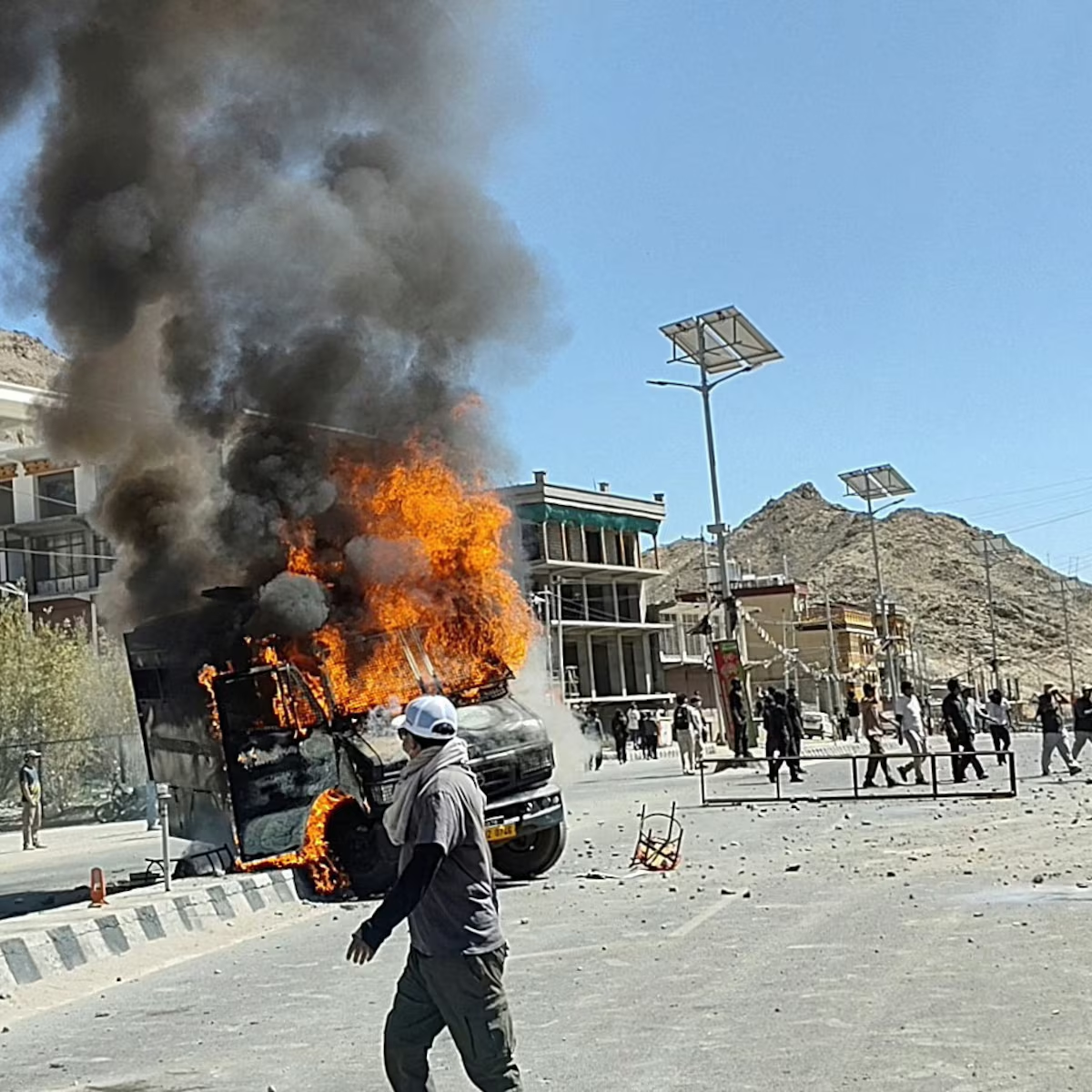
Violence broke out in Leh, Ladakh, on Wednesday during protests demanding statehood and inclusion under the Sixth Schedule of the Constitution, a long-pending demand of local groups. What began as a peaceful demonstration spiraled into deadly clashes, leaving several feared dead, many injured, and at least 50 people arrested.
The Union Home Ministry said the violence was triggered when protesters allegedly attacked security personnel and vandalized public property. Around 30 police and paramilitary personnel were injured in the clashes. To control the situation, police opened fire, leading to casualties. The unrest erupted around 11:30 am and was brought under control by 4 pm, marking one of the most serious flare-ups in Ladakh since it became a Union Territory in 2019.
Authorities have accused climate activist Sonam Wangchuk, who recently concluded a 15-day hunger strike in support of Ladakh’s demands, of inciting the unrest through “provocative speeches.” His supporters, however, argue that the movement has been consistently peaceful and that the violence reflects the government’s failure to address genuine grievances.
Opposition seeks probe into escalation
The opposition has strongly criticized the handling of the protests, urging the Centre to conduct a thorough probe into how a peaceful demonstration turned violent.
Congress MP Manish Tewari stressed the need for sensitivity, calling Ladakh’s unrest a matter of national concern given the Union Territory’s strategic importance along the Line of Actual Control (LAC) with China.
“It needs to be handled with sensitivity, and a forensic examination of how a peaceful protest escalated into violence is essential. A clinical analysis of the ground situation is imperative, especially to identify the impulses that triggered the unrest and the individuals behind it,” Tewari said.
Other opposition leaders echoed this sentiment, insisting that ignoring Ladakh’s demands for constitutional safeguards and greater autonomy risks further alienating the region’s people.
Long-standing demands at the heart of unrest
The protesters’ central demands include full statehood for Ladakh and inclusion under the Sixth Schedule, which provides constitutional protections for tribal communities over land, resources, and governance. Activists argue that without such measures, Ladakh’s fragile ecology, unique tribal culture, and local rights will be undermined by unchecked development and outside influence.
Despite repeated assurances from the Centre, little progress has been made on these fronts, fueling frustration and unrest.
What lies ahead
The violent turn of events has drawn national attention, with civil society groups and opposition parties urging restraint and dialogue. While the Centre maintains that it is committed to Ladakh’s development and security, local groups argue that genuine political autonomy and constitutional safeguards are non-negotiable for lasting peace.
The protests, and the subsequent crackdown, underline the growing tensions between local aspirations and central policies in one of India’s most strategically sensitive regions.